Emily's Global Climate Change Scrapbook

 Temperature Change

- The aspect of climate change that receives the most attention, is the temperature increase. In fact, many people use the phrases global climate change and global warming synonymously.

- Global warming refers only to an increase in worldwide temperature, whereas global climate change refers to a number of different aspects, such as precipitation and storms.

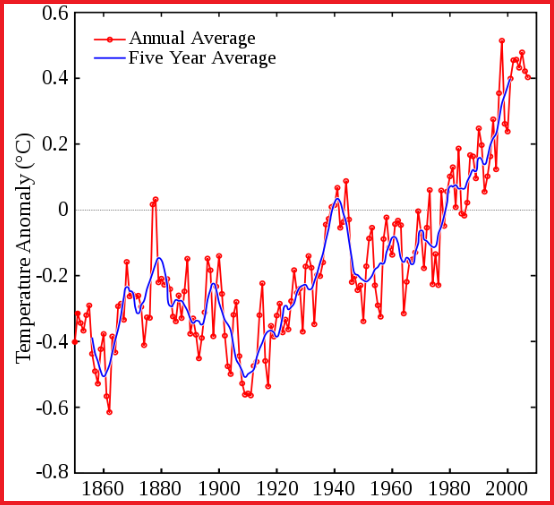
- Global temperature has risen by around .74 degrees Celsius since 1906, with 11 of the 12 warmest years on record occurring after the year 1995.

- The temperature is expected to have increased between 1 and 5.5 degrees Celsius by 2100.


What causes this temperature increase?
It is believed that greenhouse gases such as carbon dioxide, methane, and nitrous oxide are the main cause of this increase in global temperature. When present in the atmosphere, these gases trap the sun's heat, which otherwise would have been reflected back into space. The increase in temperature itself fuels several positive feedback loops, which further drive climate change.

- However, global warming does ultimately affect almost all aspects of global climate change, such as rising sea levels, decreasing global ice supplies, and changes in rainfall.

- Rising temperatures increases the risk of wildfires or droughts in some regions and increased rainfall and flooding in others. They also cause the melting of the icecaps.

- Unfortunately, even if we were to completely end all greenhouse gas emissions, scientists predict that global temperature would still raise around .1 degrees Celsius per decade due to time lag.


This free website was made using Yola.

No HTML skills required. Build your website in minutes.

Go to www.yola.com and sign up today!

Make a free website with Yola