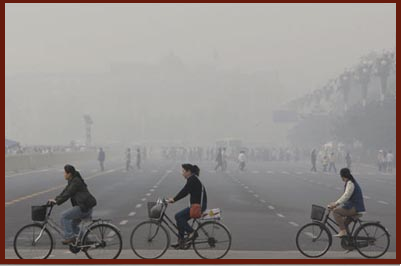
Industrial Smog (Gray air smog)
Industrial air smog is formed coal is burned, but is not completely combusted. This will leads to emissions of carbon dioxide, carbon monoxide, soot, mercury, and sulfur dioxide, which make up industrial smog.
While burning coal forms smog, weather and location can amplify its effects. Temperature inversion and mountain ranges can trap smog, making it much more lasting and dangerous.
While today in developed nations industrial smog is becoming less and less common, in undeveloped nations it still poses a large threat to both health and the environment.
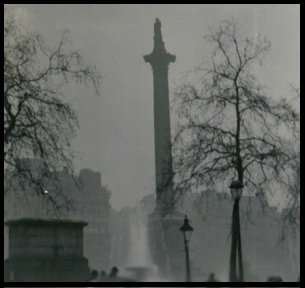
Perhaps the most well-known example of industrial smog occurred in 1952 in London (above), England due to an increase in coal consumption. It lasted from December until March and resulted in over 4,000 deaths.
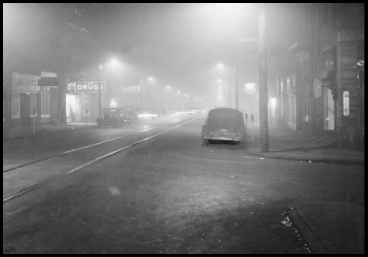
Another example of the deadly potential of industrial smog
took place in Donora, Pennsylvania 1948 (above). Nearby hills contributed to
thermal inversion, which trapped smog created by a steel and wire
factory and lead to the death of 21 people.