Changes in Sea Level

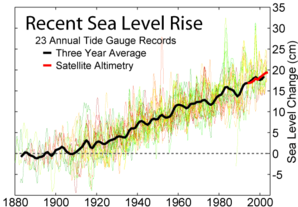
- As temperature increases, so does sea level.

- The Worldwatch Institute states that sea level has risen 394 feet since the last ice age and the rate of increase is proliferating.

- Between 1961 and 2003 sea level rose around 1.8 millimeters a year. Between 1993 and 2006 sea level rose an average of 3.1 millimeters per year.

- Melting ice sheets and glaciers cause large amounts of freshwater to run into the ocean. This accounts for 43% of sea level rise.

- It is estimated that if the Greenlandic ice cap were to melt completely, global sea level would rise by 21.3 feet.


Ocean2.mp3

- The other 53% occurs because of thermal expansion. As water heats up, it expands. While this does not actually add more water, it still creates an increase in volume, which causes sea level to go up

- Rising sea levels will cause harm to aquatic habitats, leading to the destruction of coral reefs, mangrove forests, and salt marshes.

- Beach erosion, introduction of salt water into aquifers, and flooding of coastal regions will also ensue.

- Rising sea levels will greatly impact those living in coastal regions, who account for 53% of the United States population.

- An increase of only 20 inches could cause more than 90 million people to experience annual flooding.
This free website was made using Yola.

No HTML skills required. Build your website in minutes.

Go to www.yola.com and sign up today!

Make a free website with Yola