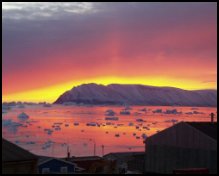
Changes in Global Ice

-As global temperatures increase, ice caps and glaciers are beginning to melt at a rate much faster than previously expected.


-While a few ice floes melting will not raise sea levels or cause mass destruction, melting glaciers and land ice from places such as Antarctica, Alaska, and Green could.


-Melting ice caps also create a positive feedback loop. Ice reflects sunlight back into space.


-Without it land and oceans are forced to absorb this extra heat, thus warming the atmosphere and further deepening the effects of global warming.


-This in turn goes on to melt more ice.


Global ice levels are on thin ice…

Literally


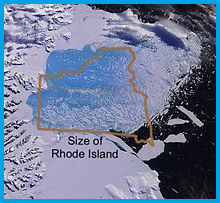
In 2002 part of the Larsen B ice shelf, a piece the size of Rhode Island, broke off and floated away. In around 35 it had broken up and was completely gone.

-The 2007 Naval Institute Proceedings reported that winter ice cover is decreasing at a rate of 3% per decade and these rates are still increasing.


-Measurements taken between the 1950s and the 1990s showed that Alaskan glaciers were decreasing in thickness by a half a yard per year.


-Measurements taken from the mid-90s to 2003 showed that glaciers were losing an average of around 2 yards per year.


-The Byrd Polar Research Center states that Andean glaciers have shrunk by up to 25%.


-Arctic island glaciers are retreating at around 492 feet per year. 


This free website was made using Yola.

No HTML skills required. Build your website in minutes.

Go to www.yola.com and sign up today!

Make a free website with Yola